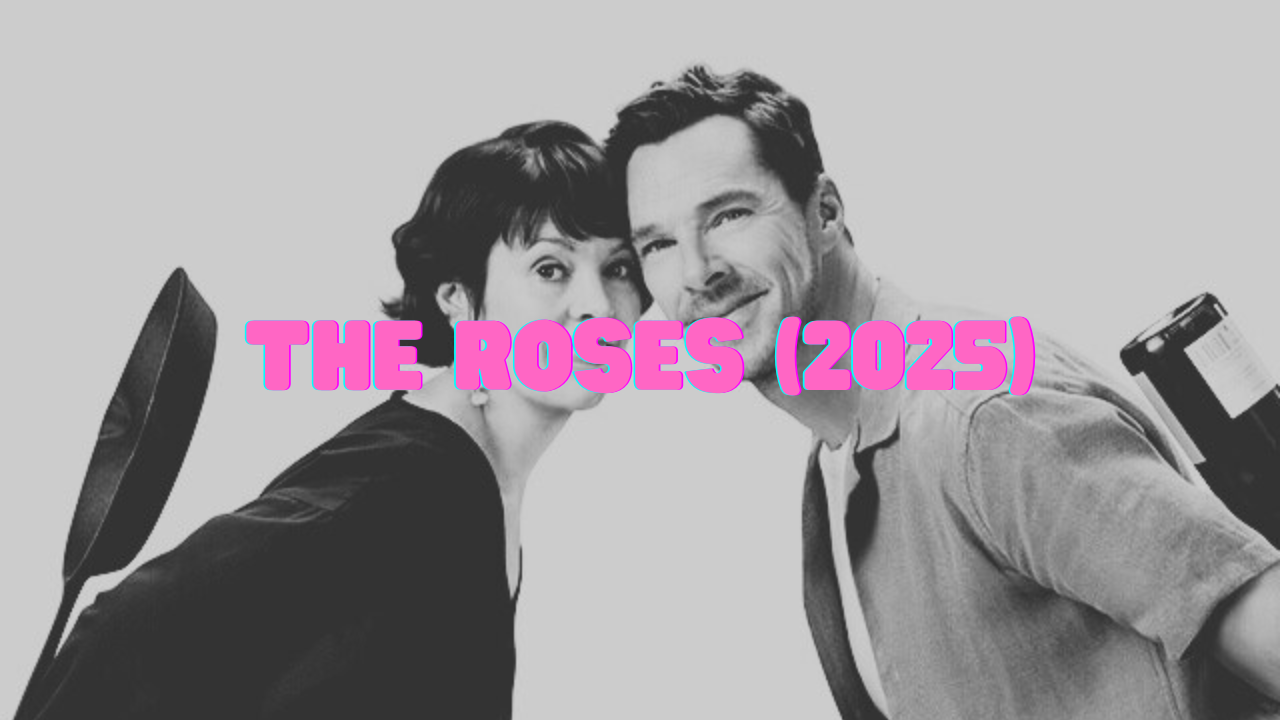

Stakes, Tone, and Meaning
Every few years a film arrives that feels less like a release and more like a provocation — something designed not to entertain or reassure, but to diagnose. The Roses (2025), Jay Roach’s re-imagining of The War of the Roses, is one of those. Its satire lands in a culture that has made detachment fashionable, where irony has metastasized into a kind of civic virtue. The film matters precisely because it has the nerve to be emotional in a time when emotionality is considered gauche. It turns the modern marriage — polite, brand-conscious, exhausted — into a laboratory for observing how intelligence can curdle into cruelty.
In 2025, audiences are fluent in self-awareness. We’ve grown used to art that signals its cleverness in neon: films that narrate their own ironies as if to pre-empt critique. Roach and writer Tony McNamara refuse that comfort. They take a story once played as farce and treat it instead as an anthropological case study. Their version isn’t about divorce as a legal process, or even about love as an emotion, but about the slow decay of sincerity in a world that prizes the performance of poise. The Roses’ marriage becomes a microcosm of a larger exhaustion — the fatigue of people who have achieved everything except the ability to feel uncomplicatedly.
What’s remarkable is how confidently Roach threads tone. His background in comedy gives him a precision of timing that many dramatic directors envy, yet here he wields that skill toward unease. The Roses isn’t funny because it mocks; it’s funny because it tells the truth faster than we can defend against it. The laughter it provokes is recognition.
The Construction
The structure of The Roses (2025) operates like a carefully drafted building plan — symmetrical, deceptive, and ultimately self-collapsing. It begins with the meeting of Theo (Benedict Cumberbatch) and Ivy (Olivia Colman), two people whose wit functions as courtship. They recognize each other through language, through a mutual understanding that cleverness can stand in for vulnerability. Roach stages these early moments with deliberate simplicity: handheld intimacy, warm light, a romantic rhythm that already feels slightly performative. From the start, we’re watching two architects, not lovers — people designing an idea of happiness rather than living it.
Their migration from London to Mendocino is the pivot from aspiration to empire. The film’s mise-en-scène changes accordingly: clean lines, coastal minimalism, the aspirational palette of well-adjusted adulthood. They have twins, a photogenic home, a dinner-party circuit that could pass for stability. What makes these sequences unsettling is how seamlessly the dialogue overlaps; everyone talks like they’re auditioning for a lifestyle ad. Roach’s direction here is precise — he knows that the most dangerous kind of privilege is the one that can explain itself.
When the storm arrives and destroys Theo’s naval museum — his monument to legacy — the film executes a perfect inversion. Ivy’s failing restaurant fills with refugees from the same storm and with them comes opportunity, acclaim, expansion. The symmetry breaks, and the narrative’s architecture shifts from balance to dissonance. The film’s second act is built on this imbalance: her ascent and his implosion. But what’s profound is the absence of villainy. Theo’s jealousy is not cartoonish; it’s the natural consequence of a man whose identity was professionalized. Ivy’s ambition isn’t greed; it’s hunger finally given permission to feed. The construction of the plot mirrors the construction of their life: elegant, functional, and doomed the moment it stops serving growth.
The house they later build — the dream project meant to reset their marriage — becomes the film’s central metaphor. Every wall is immaculate, every piece of furniture deliberate, yet the space feels suffocating. Roach treats architecture as psychology: the geometry of love that once offered safety now traps them in perfect proportion. By the time the children leave for school and the house becomes silent, the set itself feels like a mausoleum for everything that used to be human between them.
The Collapse
The most impressive quality of The Roses (2025) is how it collapses emotional distance without ever resorting to melodrama. The dialogue — McNamara’s signature cocktail of intellect and poison — exposes the way high-functioning adults weaponize self-awareness. Theo and Ivy are never less articulate than when they are most cruel. Their intelligence becomes a shield, their empathy a currency they trade only when useful. Cumberbatch and Colman understand this at an almost molecular level. His physicality — shoulders locked, jaw precise — is the portrait of a man convinced that composure is virtue. Her warmth flickers like a gas flame, beautiful until oxygen turns it into hazard. Together, they map the pathology of civility turned violent.
Roach directs their arguments as choreography rather than chaos. Each exchange is staged with the precision of a duel: no raised voices, no sloppy emotion, only calibration. That control makes the eventual unraveling more excruciating. When the fights turn physical, they retain the grammar of earlier verbal sparring; even destruction follows rules. The pacing is deliberate, the tonal rhythm classical. Roach refuses to score the scenes for catharsis; instead, he builds tension through the silence that follows cruelty.
The surrounding characters function as tonal barometers rather than plot devices. Ncuti Gatwa, as Ivy’s restaurant manager, injects a rare sincerity that the film uses sparingly but to great effect. He is the ghost of a moral universe that no longer applies. Kate McKinnon and Andy Samberg, as the couple’s mutual friends, provide the social mirror — people who watch, wince, and continue attending dinner parties as though witnessing dissolution were another form of entertainment. Their presence gives the satire a cultural spine: The Roses isn’t just about marriage; it’s about how a society anesthetized by irony processes suffering as lifestyle content.
The Ashes
By its final act, The Roses (2025) transforms from domestic comedy into something mythic. The escalation — the allergic reaction, the staged revenge, the broken Julia Child stove — plays out like ritual purification. There’s nothing accidental about the destruction; it’s the only language left available to them. The final whiteout feels inevitable not as plot device but as conclusion to a philosophy: two people who confuse endurance with devotion, unable to stop performing even when the act becomes lethal.
What the film leaves behind is a critique of the way we confuse stability with virtue. Roach and McNamara expose the moral vanity of the well-educated couple — people who can narrate their emotions but not feel them. The satire cuts deeper because it’s so familiar. The Roses are not monsters; they’re us on our better days, when we mistake coherence for love. Beneath the wit and ornament lies a genuine terror: that modern intimacy has been reduced to a collaboration between two brands.
Dehd’s “Bad Love” becomes the film’s thesis disguised as soundtrack. The editing syncs to the song’s percussion, creating an emotional rhythm that feels less musical than biological. The waves crashing against Mendocino aren’t metaphors; they’re reminders of the elemental force the characters keep refusing to acknowledge. Roach uses that motif to connect form and meaning — every act of domestic violence here is also an act of denial, an attempt to control nature by design.
The brilliance of The Roses lies in its refusal to moralize. It doesn’t ask us to pity or condemn. It simply shows how intimacy corrodes under the pressure of performance. By the time it ignites, there’s nothing left to judge — only the faint recognition that this outcome was written from the beginning, when two people mistook admiration for love and irony for understanding.
Aftermath of the Roses (2025)
The film doesn’t end so much as erase itself, as though language and image alike have reached their limits. It’s a gesture that feels both cinematic and philosophical — the recognition that some stories can only conclude in silence. What remains afterward is less emotion than residue: the ache of recognition, the knowledge that we’ve watched something disturbingly accurate about the way modern affection survives itself.
In 2025, The Roses (2025) stands apart because it restores to satire its moral seriousness. It reminds us that mockery without compassion is empty, and that laughter can coexist with grief when both are rooted in truth. Roach, once the craftsman of crowd-pleasers, proves here that intelligence can still sting, and that irony, used correctly, can be the most honest form of despair. Cumberbatch and Colman carry that despair with elegance — two performers at the height of their control playing characters who’ve lost all of theirs.
What lingers isn’t the cruelty, but the quiet thesis behind it: that in the architecture of modern love, beauty and ruin share the same blueprint. The house may be gone, but the design endures.
Leave a Reply